

How to land your first telecoms engineer role in the UK

You do not need years of experience to get into telecoms engineering. Many entry-level roles across the UK actively recruit people with no technical background, training them from day one. If you have a full UK driving licence, a willingness to work outdoors and a practical mindset, you are already ahead of most applicants.
What does a telecoms engineer do?
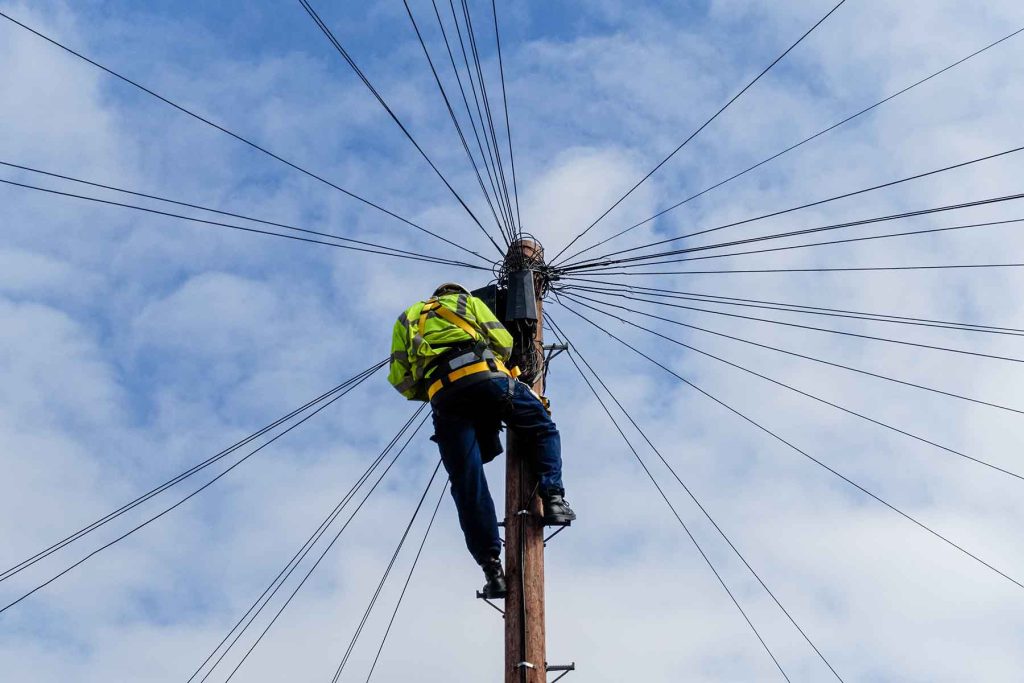
Telecoms engineers install, maintain and repair the physical and digital infrastructure that keeps the UK connected. That spans copper telephone lines, fibre optic cabling, broadband connections and increasingly 5G network equipment.
Day-to-day, you might be working on customer premises connecting a new fibre service, in a street cabinet upgrading copper connections, or on a large infrastructure project laying underground ducting. The work is hands-on, often outdoors and varies by role.
Qualifications you need and those that help
Do you need a degree?
No. Most field-based telecoms roles do not require a degree. What matters more is your ability to work safely, follow technical procedures and communicate clearly with customers.
Useful pre-entry qualifications
If you are still in education or planning ahead, these qualifications signal genuine intent to employers:
- City & Guilds Level 3 Diploma in ICT Professional Competence — directly relevant to network cabling and supports your ECS Gold Card application
- BTEC Level 3 in Engineering — gives a solid grounding in technical principles
- CompTIA Network+ — recognised across both field and network-facing roles as one of the most widely recognised certifications in UK telecoms
- NVQ Level 2 or 3 in Telecommunications — can be completed while working, which makes it practical for people who want to earn and learn simultaneously
The ECS card: why it matters
The Electrotechnical Certification Scheme (ECS) card is an industry ID and competence card used across telecoms and electrical contracting. Many sites and clients require engineers to hold one before they can work on site. There are different card grades tied to your qualification level, a trainee card gets you started while you work toward your NVQ Level 3.
Getting your ECS card early shows employers you are serious and saves them administration time which makes you a more attractive hire.
The most important practical requirement
A full UK manual driving licence is non-negotiable for virtually every field-based role. If you do not have one, getting it before you apply will remove the biggest barrier most candidates face.
Certifications that help you stand out
Beyond baseline qualifications, these certifications are worth pursuing once you are in your first role or shortly before applying:
- Openreach accreditations — Openreach operates one of the largest field engineer workforces in the UK. Their accreditation modules cover copper installs, fibre to the premises, working at height, confined space awareness and asbestos awareness. Many contractors who supply labour to Openreach projects run their own in-house training programmes that deliver these accreditations
- City & Guilds 2396 (Inspection and Testing) — useful if you move into network infrastructure
- PASMA (Mobile Access Tower) and IPAF (Powered Access) — relevant for any work involving height access equipment
When PPR places trainee engineers, candidates who already hold even one or two of these certifications consistently attract faster offers and stronger day rates.
How to get practical experience before your first paid role
Experience is a chicken-and-egg problem for many aspiring engineers. Here is how to break the cycle:
Volunteer or shadow. Small local ISPs and independent telecoms contractors often welcome people who are willing to shadow for a day or two. Even one day on site gives you something to talk about in interviews.
College workshops and apprenticeships. Several further education colleges run short telecoms engineering programmes linked to local employers. An apprenticeship with a contractor gives you paid work, structured training and a qualification at the same time.
Self-study and home labs. You can build and terminate Cat5e/Cat6 patch leads, practice coax connections and learn fibre theory using low-cost materials available online. It sounds basic, but showing an interviewer that you have practised terminations at home demonstrates initiative that many candidates lack.
Apply to a structured trainee programme. Some of the fastest routes into the industry bypass the experience problem entirely. PPR Recruitment’s trainee telecoms engineer roles are specifically designed for people with no prior technical background. Training is provided from day one, you are supervised by accredited trainers and you earn while you learn.
Entry-level telecoms roles available across the UK
The UK telecoms job market offers several distinct entry points. Here is a breakdown of what to expect:
Trainee fibre engineer
Focused on fibre to the premises (FTTP) installs. You will learn to splice fibre, test connections and work with customers at their property. High demand across most UK regions as full-fibre rollout continues. Starting pay typically sits in the £22,000–£28,000 per year range for employed roles, with higher day rates available through contract work.
Trainee copper engineer
Covers PSTN and ADSL/VDSL broadband connections. Copper installs are declining as fibre takes over, but copper fault-finding and maintenance work is still common and provides excellent foundational skills. Copper experience also makes it easier to cross-train onto fibre.
PPR places candidates directly into trainee copper engineer roles with contractors who provide full training and supply a company van, PPE and tools on completion.
Network cable installer
Works on structured cabling systems inside commercial buildings such as offices, data centres, hospitals and schools. Cleaner working conditions, more regular hours and strong demand from the commercial construction sector. City & Guilds 4520 and an ECS Gold Card are the standard route in.
General telecoms operative
A broader role covering a mix of installation and maintenance tasks. A good starting point if you are not yet sure which specialism suits you. PPR’s telecoms sector page lists live roles across multiple categories.
What employers look for in new telecoms candidates
Having spoken to hiring managers across the sector, the qualities that come up most often for entry-level candidates are:
- Reliability — showing up on time, every day, matters more than almost anything else in field engineering. Contractors schedule jobs tightly; one no-show cascades through the day
- A positive attitude to learning — you will not know everything at the start. Employers want people who ask questions rather than guess
- Customer-facing confidence — many installs happen in people’s homes. Being polite and clear with customers is part of the job
- Physical fitness — carrying equipment, working in awkward spaces and being on your feet all day is the reality of field work
- Basic IT literacy — you will use handheld devices to log jobs, run tests and communicate with dispatch
What you do not need is a perfect CV. Many of the most reliable engineers in the industry came in with no prior telecoms experience at all.
Ready to take the first step? Upload your CV to PPR Recruitment today and speak to a consultant who specialises in telecoms placements across the UK. No experience necessary just bring the right attitude and a full driving licence.